Flickr Badge

Showing posts with label event. Show all posts

Sunday, December 19, 2010

The Scavenger app from my Chennai Geeks presentation

This weekend I presented at the Chennai Geeks meet on using HTML5 to build mobile applications. As a part of the talk, I showed a sample scavenger application that was built using HTML5.

The application defined a list of scavenger locations, and used the Geolocation API to check you in when you were close to one of the defined locations. The app used Local Storage to save the list of previously visited locations and the timestamp when you last checked in. Finally we used some CSS3 Media Queries to show some additional information when the app was accessed through a desktop browser.

To run the application, just copay and save the code below and open the html file in Firefox 3.6, Google Chrome, iPhone or Android browser.

Here is the source code for the application:
<html>
<head>
<title>Fivesquare</title>
<script type="text/javascript" src="https://ajax.googleapis.com/ajax/libs/jquery/1.4.4/jquery.min.js"></script>
<script type="text/javascript" src="json2.js"></script>
<style>
header {font-size: 11px;}
h1 {font-family: Verdana,Helvetica,sans-serif; font-size:25px;}
.error, .notice, .success {padding:.8em;margin-bottom:1em;border:2px solid #ddd;}
.error {background:#FBE3E4;color:#8a1f11;border-color:#FBC2C4;}
.notice {background:#FFF6BF;color:#514721;border-color:#FFD324;}
.success {background:#E6EFC2;color:#264409;border-color:#C6D880;}
.location {background: #eeeeee; border-radius: 15px; -moz-border-radius: 15px; -webkit-border-radius: 15px; margin: 5px 0; padding: 10px;}
.visited {background:#ccff99; font-weight: bold;}
.location-distance {display:block; color: #555555; font-weight:normal; font-size: 0.8em;}
.location-checkin {display:block; font-weight:normal; font-size: 0.9em;}

/* Dont show distance and timestamp on small screens */
@media only screen and (max-width: 480px) {
.location-distance {display:none;}
.location-checkin {display:none;}
}

</style>
<script type="text/javascript">

Number.prototype.toRad = function() {
return this * Math.PI / 180;
}

// List of locations. Format: ["location name", lat, long]
var LOCATIONS = [
["Thoughtworks", 13.01245, 80.201451],
["Ashoka Pillar", 13.035028, 80.212512],
["Kathipara", 13.007359, 80.20394]
];

// Haversine formula to calculate distance (in km) between two lat/long coordinates
function distance(lat1, lon1, lat2, lon2) {
var R = 6371; // km
var dLat = (lat2-lat1).toRad();
var dLon = (lon2-lon1).toRad();
var a = Math.sin(dLat/2) * Math.sin(dLat/2) +
Math.cos(lat1.toRad()) * Math.cos(lat2.toRad()) *
Math.sin(dLon/2) * Math.sin(dLon/2);
var c = 2 * Math.atan2(Math.sqrt(a), Math.sqrt(1-a));
var d = R * c;
return d;
}

function check_in(index) {
jQuery("#status-bar").html("<div class='success'>Checked in to " + LOCATIONS[index][0] + "</div>");
var check_ins_str = localStorage["check_ins"];
if (!check_ins_str) { check_ins_str = "{}"; }
var check_ins = JSON.parse(check_ins_str);
var location = LOCATIONS[index];
check_ins[location[0]] = new Date();
localStorage["check_ins"] = JSON.stringify(check_ins);
}

function show_distance(index, d) {
var container = jQuery("#locations-container").find("#location-"+index);
container.append("<span class='location-distance'>" + Math.floor(d*100)/100 + " km away</span>");
}

function success(pos) {
var distance_list = [];
for (var i=0; i<LOCATIONS.length; i++) {
var d = distance(pos.coords.latitude, pos.coords.longitude, LOCATIONS[i][1], LOCATIONS[i][2]);
show_distance(i, d);
distance_list.push([i, d]);
}
distance_list.sort(function(a,b) { return a[1] > b[1]; });
if (distance_list[0][1] < 2) {
check_in(distance_list[0][0]);
} else {
jQuery("#status-bar").html("<div class='notice'>No checkins</div>");
}
}

function error() {
jQuery("#status-bar").html("<div class='error'>Unable to get position</div>");
}

function locate_user() {
navigator.geolocation.getCurrentPosition(success);
}

function render_previous_check_in(index, check_in_date) {
var container = jQuery("#location-" + index);
container.addClass("visited");
container.append("<span class='location-checkin'>Last checked in on " + check_in_date + "</span>");
}

function show_checkins() {
var check_ins_str = localStorage["check_ins"];
if (!check_ins_str) return;
var check_ins = JSON.parse(check_ins_str);
for (var i=0; i<LOCATIONS.length; i++) {
var previous_check_in = check_ins[LOCATIONS[i][0]];
if (previous_check_in) {
render_previous_check_in(i, previous_check_in);
}
}
}

function show_locations() {
var container = jQuery("#locations-container");
for (var i=0; i<LOCATIONS.length; i++) {
container.append("<div class='location' id='location-" + i + "'><span class='location-name'>" + LOCATIONS[i][0] + "</span></div>");
}
}

jQuery().ready(function() {
show_locations();
show_checkins();
locate_user();
});
</script>
</head>
<body>
<header>
A HTML5 mobile app demo by <a href="http://siddhi.blogspot.com">Siddhi</a>
<h1>Fivesquare</h1>
</header>
<div id="status-bar"><div class="notice">Checking your location...</div></div>
<div id="locations-container"></div>
</body>
</html>
Wednesday, November 24, 2010

Really disappointed with TiE Entrepreneur Awards

I attended TiECon Chennai today. This is the big annual event organized by TiE Chennai for the entrepreneur community here. I'll put down my detailed experience notes elsewhere, in this post I want to talk about the TiE Chennai Entrepreneur of the Year awards.

TiE gives these awards to entrepreneurs every year in a variety of categories - social entrepreneur, start up, family entrepreneur and so on.

This time I had a chance to check out the award winners for the last three years, and to say I was completely disappointed is an understatement.

The entrepreneur awards were all given to huge, well established companies. Most of these people had been running their companies for 15 years or more. Some over 25 years. I can understand giving them an award when they were in the startup phase, but 20 years after they established their company? And we are talking companies that have hundreds of crores in revenue. Many of these are publicly listed companies. See the previous award winners here.

How the heck can you call these startups? Why is TiE giving Entrepreneur of the Year awards to them? Will we see Narayana Murthy and Mukesh Ambani being awarded next year?

There is no way that entrepreneurs in the audience are going to relate to these companies. Far from being an inspiration, it is extremely deflating that a forward thinking organization like TiE chose to ignore actual startups and instead promote the big, well established names :(

Monday, October 04, 2010

3 Oct OCC Meetup Roundup

We had the October 2010 meetup of the Chennai OCC. Tony Aug, VP IT of Sanmina had come down to attend the meet. Once of the big problems startups often have is understanding how large enterprises make decisions. This is really important in the context of B2B enterprise sales. So it was really good to have Tony come down and talk about the executive perspective when purchasing software.

Some points from the meetup -
  • The #1 reason for purchase in a recessionary environment right now is to cut costs. If you can show substantial cost reductions, then that is a big win.
  • Many cloud/SaaS startups dont understand the security and privacy needs of enterprises. Eg: A company like Sanmina with operations in 20 countries need to run only on certified infrastructure that comply to EU security and privacy regulations, HIPAA, and a host of other regulations. Startups right now cannot guarantee all this
  • Pricing: $10/user a month sounds reasonable, but multiply it by 50,000 users and it becomes huge. So you will need to find a way to get it into the team on one pricing model and then switch to another pricing model (possibly a flat price) when rolling out to the whole organization
  • Dont forget about switching costs. Once an organization has spent tons of money on training and integration, it is unlikely that they will switch over, even to a superior product, unless there is a really easy path for them to do so
  • Subscription pricing is great because it allows organizations to get started without expensive capital expenditure. The old model was to buy expensive servers, install expensive software, training, integration and then you could look to get RoI. The new model is to subscribe and cancel if it doesn't work out
  • You can expect a small team to pay by credit card, but larger orders will need a purchase order and go via the purchasing department. Once that happens a lot of other stakeholders will look at it and question the need for the purchase. So you will have to answer to these other stakeholders too.
  • Lock-in is important in a subscription service. Most companies will want to be sure that they can get their data out at any time
  • Sanmina is a huge believer in open source - cuts costs and there is a community to help. For mission critical systems they pay for commercial support
  • Escrow: Larger companies will usually ask startups that the source code be put in escrow. In case the startup closes down, the company gets access to the source.
  • Using tools like Linkedin, it is really easy nowadays to find a path to get to a decision maker in any company

Wednesday, September 22, 2010

The difference between a conference and an unconference

One of the things I really like about unconferences is that there is very little "gyan" and a lot of experience sharing. This came home to me when participating in a session on hiring.

The question was: "What strategies do you follow for hiring and building a team?"

This same topic was discussed in a panel in the NASSCOM Product Conclave last year, with some VCs on the panel. In typical panel style, a lot of gyan was thrown around: "Hire only the best people", "Top people create top teams" etc.

That's stating the obvious. I mean which startup doesn't want to hire the best people? Do these VCs believe startups are intentionally hiring poor people because they believe its a better strategy??

The fact is that there are a lot of on the ground challenges to hiring that these panelists are hand waving away with their gyan:
  1. Startups are always short of cash and cannot match the compensation in bigger companies
  2. A lot of startups hire good guys only for them to leave in 6-12 months
  3. Really good guys are hard to find
  4. Most employees are not interested in stock options (a lot of Silicon Valley returned VCs talk about stock options... one wonders if they have actually recruited in India)
At the end of the panel, the audience is usually unsatisfied. The panelists tell them what they already know without a word on tackling ground level challenges that they face.

Now compare that with an unconference. Once more this topic came up at the TiE unconference.

Look at the answers this time:
  1. Many top people are around in smaller cities, who are not taken by big companies because of a lack of english skills. They are smart and make good startup employees
  2. Find a few people who believe in your vision and then complement them with freshers
  3. Look at 6 month internships - lots of smart people available as interns
  4. Look at your requirements - not all types of work require the best people. Some types of work are repetetive and may just make good employees bored.
  5. Look at the attitude and teach the skills
These are strategies that are coming from the experience of people who actually have to tackle these on-the-ground problems. At the end, the participants feel charged up with ideas to take back and implement the next day.

This is really what makes an unconference different for me. The focus on real solutions to real problems is invaluable.

Saturday, September 11, 2010

Interesting Themes for the TiE unconference

I was looking at the position papers for the TiE Unconference. Position papers are topics that participants want to discuss at the unconference.

I've taken some that caught my eye and organized them into themes.(Find these topics interesting? Then register for the TiE Unconference and participate in the discussions)

Product-Market Fit
You may have an initial hypothesis about why your product is useful to enterprises. How do you validate it? There are several factors: which customers to reach out to feedback? How do you identify the *right* person within the org. for feedback? How do you evaluate their response? etc.
How does an entrepreneur determine if his product really has a market fit that can guarantee rapid growth for the enterprise? The question becomes relevant when the product addresses a latent need that is not very explicit in the market place. What are the typical pointers to a 'successful' or an 'unsuccessful' product?


Scaling
there are many good companies which are doing great jobs in their niche. but very few Ideas scale, how can these companies tweak their business model, and focus to become large profitable organization
A good idea and you start enthusiastically by yourself or with friends. The founding team is all excited and there are no 'rules'. Works for sometime, but after a few years, when revenues start happening and the start up has to move to next level....


Marketing/Sales
Bootstrapped startups have very low or nonexistent marketing budgets. If you're making a product for the global market, how can you make sure your product is found by the right people?
We are a young startup with a service offering of online ERP and HR software. We are facing a lot of roadblock in marketing SAAS to our target clientèle (which are mostly old-style brick and mortar firms) and especially with a slim sales force. Would like to see if some inputs could be got on this.
We are a startup with a service offering of Management Consultation and Leadership training. We are facing a lot of roadblock in marketing our Webinar to the right audience inspite of knowing them. Would like to see if some inputs could be got on this.
The idea is to understand the dynamic behind catching customers into a cloud and to retain them by providing continuously improved services.
Building a product that can be consumed online implies that it's location agnostic. How to target companies in the valley being in India ? Is it a necessity to be in the US?
Would like to hear about market entry experiences of product startups with specific reference to early stage high yield marketing techniques.


Direction of TiE
For TiE education, Mentoring and Networking are the pillars. These are delivered through various events in different formats: Talks, My-Story sessions, Panel discussions, Member networking sessions, Unconference (from now) etc..It will be useful to know how our members value these and what additional or alternate delivery formats and activities should we consider to be relevant and aligned with our members' expectations.
To understand better where TiE stands in the entrepreneur ecosystem today, and what role do start ups think TiE can play for them and how?


Innovation
There is no dearth of ideas on solving problems. How can we leverage all the collective intelligence in the high tech industries to foster social innovation. How can we leverage technologies to improve the life of rural folk?


Recruiting
How do we identify great co-workers ? How do we build a team that lasts through the rough years ? How do we build a team that creates great products ?
How Recruiting the right people is the Key to Scale up and Establish your Start up


Services to Products
The difference starts from recruitment, development, environment and also the technology. The things to be taken care for getting the people shift their base from project based working to products.

Monday, September 06, 2010

5th Sep OCC Meetup Roundup

A couple of links from the discussions at yesterdays OCC meetup

- Naeem Zafar's Seven Steps to a Successful Startup - http://www.scribd.com/doc/15245595/7-Steps-to-Successful-Startup
- Steve Blank's blog - http://steveblank.com/

We started out with a theme - How do you find your first customer?

Suresh pointed out that we need to differentiate between customer (who pays) and a user (who uses the software). What we really need in the beginning is a user who can validate our assumptions. Once you have a validated model, then it is a lot easier to find a paying customer.

The conversation went on to How desperate is your customer's need? The more desperate the need is, the easier it is to find and sell. Sometimes entrepreneurs work on products that that are not solving really desperate problems. A company may have a hundred problems, but stakeholders only have time to only solve 5-10 of them a year. Is the problem you are solving in their top-10?

Here is a story from Steve Blank's book The Four Steps to the Epiphany (summarized):
Imagine a bank with a line as customers wait for an hour to cash paychecks. You have a product that could reduce waiting time to ten minutes. You meet the president and tell him you have a product that could solve his problem. What does the president say?
  1. "What problem?" - The president doesnt realize they have a problem. They won't become customers anytime soon. They are late adopters
  2. "Yes I feel bad about it and give them cups of water" - They know they have a problem but are not motivated to solve it. It's not an important problem to them.
  3. "This is a big problem, we are losing $500,000 a year! I'm looking for a a product that will cut processing time by 70%, cost less than $150,000 and integrate with our back end" - Getting warm. Recognize they have a problem and have visualised a solution
  4. "I requested our IT department to develop a solution, but it doesn't work and keeps crashing." - Hot. They have a problem and are spending money on solutions, but nothing works.
  5. "Boy, if we find a vendor who solves this, we can spend the $500,000 I've budgeted for it!" - Fiery hot. Ready to spend big, but no solution in sight. Perfect first customer
In case we thought the last type of customer doesn't exist, Dorai told a story of how he was talking about his vision to a customer and it was such a desperate problem that they paid him in advance to create a product to solve it. You know you have a market when customers are willing to part with their money even before you have started development. Steve Blank calls these customers "Earlyvangelists".

This tied in with the theme of a track at the upcoming Nasscom Product Conclave, which is Sell, Develop, Market, Sell. In other words, first sell your vision, and get someone to buy into it. Only then start with development. Where most of us think of selling as the last step, it really should be the first one.

From there we went into Steve Blank's Customer Development method and Naeem Zafar's 7 steps (links above). Both methods advocate having a customer to validate assumptions even before you start development.

The discussion also went into 2 common product development strategies

- Find a customer, then develop the product (Customer Development method)
- Create products, launch, and go for customer usage (Web 2.0 VC method?)

and the pros and cons of each method. With that we broke up for networking.

Thursday, January 14, 2010

Monday, September 28, 2009

Test Driven Development in Python

Here are the slides for my talk at Pycon India this weekend. The talk was on doing test driven development in Python and it looked at 3 frameworks - unittest, py.test and nose.

Sunday, January 18, 2009

My Talk at Genesis

I gave a talk last Sunday at Genesis in IIT, Madras. My talk was on planning the operations. Here are the slides for the talk. Since they don't make much sense without the commentary, I have attached a bit of commentary as well.

IIT Business Plan Workshop
View SlideShare presentation or Upload your own. (tags: genesis event)


Why Plan
"Would you tell me, please, which way I ought to go from here?"

"That depends a good deal on where you want to get to," said the Cat.

- Alice in wonderland

The first part of the talk was about why you need to plan in the first place. Many students believe that the idea of the operations plan is so that you can show it to venture capitalists and get funded (or perhaps win business plan competitions). The point I tried to emphasise is that the plan is something that helps the entrepreneur with the big picture. Running a startup is not a matter of following a fixed set of steps until you get rich. Rather, you will be fighting fires every day as something or the other goes wrong. When you get consumed with all these small fires, it is easy to lose the big picture, and thats when you need your operations plan to get back on track.

Rules for operations planning
With that I talked about 5 rules of operations planning. Here they are:

1. Know Where You Are
At any point you need to know where you are. If your plan calls for one year of development before you release a product, then you should be able to know if you are on track at any point. For this, you need to have intermediate milestones where you can check your progress and adjust your plan accordingly. For a software startup, I would say you need a milestone at least once a month. This would be a release with a subset of features of the final product.

2.Churn, baby, churn
You may have done a lot of market research, but you cannot gauge the market reaction until you actually get your product or service into the market. Therefore, get it out as soon as possible - even if it is only a small subset of your final vision - and then use market feedback to drive the product. In order to do this, you need to break up your product or service into chunks that are complete and can be released.

3. Be Flexible
Often opportunities arise that could not have been predicted at the start. Maybe users are using your product in ways you did not plan, or perhaps a new opportunity presents itself. A startup needs to be able to take advantage of these opportunities. A small team of generalists will usually trump over a team of specialists, because generalists can change direction quicker.

A story: Sabeer Bhatia and Jack Smith wanted to start a company to do web based databases. It was entirely an accident which led them to develop the first web based email system - Hotmail.

4. Know What Is Important
You need to know what is important for the product to be developed. Focus on what needs to be done to get your product in the hands of your target customers. Startups will sometimes spend money on a nice office and save money on developer workstations. While this is great for the founder's ego, it's counterproductive for the business. As far as operations go, spend on productivity enhancements rather than ego enhancements.

5. Be Ready To Start Again
"Plans are useless, but planning is invaluable" - Dwight Eisenhower

Operations planning is not something that you do at the start, but it's something you need to be continuously doing. New information keeps coming up which invalidate your old plans. Rather than stick to the old plan, throw it away and plan again. Don't be attached to your operations plan - its essentially useless - but the act of planning is very useful.

Thursday, December 25, 2008

Proto.in Registrations Open

Registrations for the fifth edition of Proto.in are open! You can register here - http://proto.in/register/

Proto.in is an event that aims to bring together startups, investors and industry people in one location. Its a two day event. The first day will have a number of talks on startups. Usually these cover topics like funding, business plans, bootstrapping and so on. There are also technology talks. The second day has some selected startups presenting their product followed by an open house where you can interact with startups and investors.

This event is the fifth edition of Proto.in. The first three editions were in Chennai, the fourth in Delhi. This edition is going to be held in Bangalore, so its pretty convenient for people from Chennai to attend.

Find out more about Proto.in here - http://proto.in/

The cost of registrations is Rs.750 for one person or Rs.1000 for two.

Again, this is the URL - http://proto.in/register/

Saturday, November 01, 2008

Chennai OCC November Meet: New venue - Ascendas Food Court

The November meetup of the Chennai OpenCoffee Club is tomorrow. There is a change in venue this month. We are meeting at the Ascendas food court at 3pm instead of the usual location at Amethyst. If you have never been to this food court, then the website has a handy map with the location of the venue. Basically it at Taramani, behind IIT and Tidel Park.

Now if you are unsure of what the Chennai OpenCoffee Club actually is, its a place for entrepreneurs, would-be entrepreneurs, and everyone else involved with startups to meet informally (that means no need to join a group or pre-register and no entry fees). We have a meet on the first Sunday of the month. The meetups are open to everyone. Join the Chennai OCC website to get an email notification before every meetup.

On the topic of the OCC website, I just wanted to point out the Chennai OCC website has a forum, so do join in the coversations.

Plus a new feature that is available is that all discussions on the website are now available as an RSS feed — Click here for the Chennai OCC forum feed — so its a really good idea to subscribe to the feed in your favourite blog reader. That will allow you to keep track of the Chennai OCC forums and, if you have joined the website, you can then join in the coversation.

Thursday, August 14, 2008

India Unconferences and Events

Chennai OCC isn't the only thing to turn one year old this month. India Unconferences and Events, a group to track unconferences and community events in India also turns one.

Over the last year, the number of community events has increased by leaps and bounds. There is an event happening somewhere almost every week. Unfortunately, it isn't always easy to track these events. Often, you only find out about the event when someone blogs about it after it's over :(

Thats where the India Unconferences and Events group helps. This group tracks tech and startup community events happening around the country. Over the last year, this group has tracked more than 120 events around the country (check out current events and past events tracked by the group)

Once you join this group (you just need a Yahoo ID to sign up), you can subscribe to the RSS feed to be notified of events as they are added. It's an open group, so if you come across a tech community event that is not in the group, you can add it to the group.

Saturday, July 19, 2008

Chennai OpenCoffee Club Turns One!

It's hard to believe but the Chennai OpenCoffee Club will soon turn 1 year old. Vaidhy and I started it with the first meetup on the 5th of August, 2007 at Subway (Read about it here). Since then, OCC has spread out to Bangalore, Mumbai, Pune, Hyderabad, Delhi, Noida and Kolkata (See the links at the bottom of this post to join these OCC groups).

What is the Chennai OpenCoffee Club?

Here's the blurb from the website
The Chennai OpenCoffee Club is a place for people involved in the startup ecosystem to meet in an informal setting. Anyone involved with startups - entrepreneurs, developers, lawyers, investors - is invited to come and join the conversation.

Chennai OpenCoffee Club Links

Media Coverage
OpenCoffee Clubs In Other Cities

If you are from another city or traveling, you might want to catch up with one of these other OpenCoffee Clubs

Friday, April 18, 2008

The Chennai Photowalk: April

I've just uploaded some of the photos from the april chennai photowalk here. The route was along OMR from Madhya Kailash to NIFT.

Monday, March 31, 2008

Roundup of Barcamp Mumbai 3

Vijay and I were in Mumbai on Saturday for Barcamp Mumbai 3. I had checked the wiki the day before and there were over 600 registrations. Wow. Out of that I guess about 200-220 turned up, which is still a pretty big crowd.

There was some confusion at the start especially with the schedule board with a big crowd putting up sessions only for everything to be rearranged by track so that all startup demos go into one room and so on. Eventually by the time everything started we were running about 90 minutes late. The other problem was the wifi. I asked about five of the volunteers, but no one seemed to know the settings. I finally got the wifi configured thanks to one of the students sitting next to me.

I first headed out to the startup demo track and checked out demos of on2biz, MediaMelon and WikiSlice. on2biz is a workflow management web app. From the demo, it looked like it is targeted towards the sales cycle. MediaMelon is a video delivery network that uses p2p to deliver the videos. I would have loved to have seen a demo, but apparently the firewall was blocking the app. WikiSlice is a UI layer around wikipedia that allows you to browse topics better (grouping related pages, subtopics etc). They have also made it work with an offline wikipedia dump. My initial reaction was why anyone would want wikipedia offline, but the discussion brought up some interesting cases like rural access.

I headed out for the Firetalk track, but it seemed to have fizzled out, nothing was happening there. I went to the tech track. A talk on jQuery was going on but both the wifi and the projector were not working in this room. The laptop was connected to a computer monitor making the slides unreadable, and the lack of wifi meant that the online demos didnt work.

The next talk was on Asynchronous IO by Bhavin. This was a really good talk, and fortunately it didn't depend so much on the slides. A couple of points - having worked with async IO, it really complicates the application logic, especially state management, so thats a tradeoff that must be made. The other problem with not handling each request in its own process is that if there are any misbehaving callbacks, they can bring down the whole server. A pretty interesting talk.

Next was my session on some of the homebrew stuff that people have done on the Nintendo DS, following which was a session on Facebook API, except the speaker didn't show up, so I left the room. I spent the rest of the day floating between rooms and the lobby area.

I managed to catch bits of Aalaap's demo of linkbunch, Aditya giving a session on Startup Saturday and Aditi doing a session on the iAccelerator program for startups at IIMA.

Just as we were leaving, we met Grishma from Whirlybird Electronics. This is a company that builds measurement and control systems for unmanned aerial vehicles. Pretty cool stuff.

One thing I was quite impressed was how many people had heard about Proto. They would mostly go "Ohh you're from Proto." If you dont know what Proto is, it is a two day event that brings together the startup ecosystem - startups, investors, invited guests, industry experts etc - and gives each selected startup six minutes to pitch to the audience. The event also has a series of talks by industry experts on technology and business topics. See the agenda for the previous edition and join the Proto.in facebook page to get a better idea.

By the way, the nominations for the July edition of Proto have just opened. If you are a startup and you would like to present at Proto, head over to the nomination page and nominate your company

Friday, March 14, 2008

Tracking upcoming community tech/startup events in India

If you've been reading this blog via an RSS reader, you might not have noticed a new addition to the blog sidebar. With the number of unconferences and community tech & startup events rapidly increasing over the last year, it's been getting harder and harder to keep track of what is happening.

A few weeks ago, I created a widget to pull in the RSS feed for the upcoming unconference and tech/startup community events in India. If you visit the blog and then scroll down the right sidebar, you'll see this widget with a list of upcoming events.

The cool thing about the widget is that its sharable. If you click the "Options" menu below the widget, you'll get options to share it in a number of ways. If you would like to put this widget on your blog, click HTML and copy and paste the code onto your blog. You can also put it on a whole number of social networking sites. There is even an option to put it on your desktop as a gadget (you'll need to download some software though).

So much for sharing the list of events. How can you get an event onto this list? Good question. These are the steps -
  1. First, you'll need an account at Upcoming. If you have a yahoo account that should do
  2. Next, join the group India Unconferences and Events. This is the group that tracks the events
  3. Third, create the event on Upcoming
  4. Once the event is created, you can assign it to the group by clicking the "Send to group?" link on the right sidebar of the event page
  5. Once you have tagged the event in the above manner, it will be picked up by the widget and displayed wherever the widget has been shared (pretty cool no?)
So, hopefully you'll no longer have a situation where you learn about an event only after reading the post-event coverage :)

Wednesday, February 13, 2008

MoMo is back in 2008

The first Mobile Monday meet in Chennai for 2008 kicks off on the coming Saturday, 16th Feb.

What?

MoMo Chennai Feb 2008

When?

2 PM to 5 PM, 16th Feb (Saturday)

Where?

Gandhi Nagar Club, Adyar, Chennai (Map)

Talks
  1. Going to market with Nokia - Find out how - Prakash Sayini , Developers Relations ,Forum Nokia
  2. Getting started with WRT (Web Run Time) development on S60 - Balagopal K.S, Technology Expert, Forum Nokia India Team
  3. Building Standards compliant mobile sites for free with mobiSitesgalore - Prashanth , Akmin
If you would like to attend, add your name here. Find the official announcement here.

Wednesday, February 06, 2008

NEN organising E-Week in India

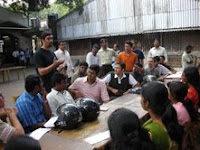
NEN is an organization that promotes entrepreneurship among college students. One of their initiatives is the E-Week (Entrepreneurship week) where colleges conduct activities related to entrepreneurship. This week, 2nd Feb to 9th Feb is E-Week this year and as a part of the E-Week, a few students joined us at the Chennai OpenCoffee Club's Feb meet on Sunday. The idea was to connect students who might be thinking of starting up with entrepreneur groups in Chennai. Also as a part of E-Week, Kausik invited me to give a talk on "Bootstrapping Your Startup" at his college.

Here is a photo of Vaidhy discussing with the students at the chennai opencoffee club:

NEN students at Feb Chennai OpenCoffee Club meet

Sunday, February 03, 2008

Day 1 Photos from Proto.in

There are tons of photos from the just concluded Proto.in. Here are a few photos from Day 1 of the event.

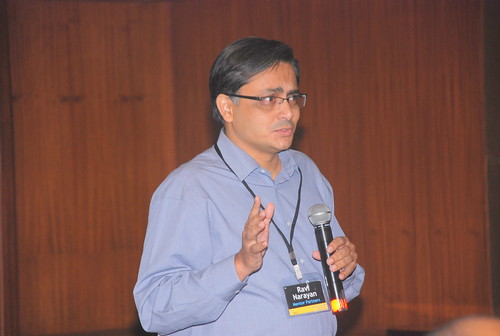
Ravi Narayan
Ravi Narayan of Mentor Partners talks about "The Role of a Mentor in a Startup"

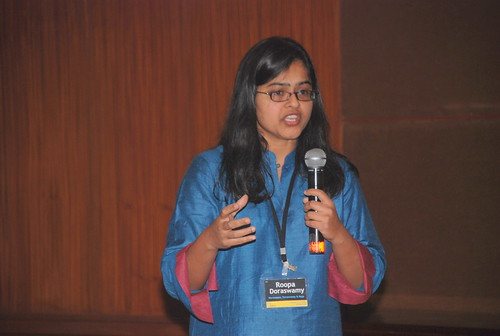
Roopa Doraiswamy
Roopa Doraiswamy on legal issues for startups

Vishal Gondal
Vishal Gondal (Indiagames)

Rajiv Dingra
Rajiv Dingra of WATBlog and WATShow

Alok Kejriwal
Alok Kejriwal (games2win.com)

Bijoy Singhal
Bijoy Singhal (Microsoft)

Siddharta Govindaraj
Me :P

Gaurabh Mathure
Gaurabh Mathure on the role of design

Chintan Mehta
Chintan Mehta (Yahoo!)

Sujai Karampuri
Sujai Karampuri of Sloka Telecom (Incidentally, Sloka presented at the very first Proto.in)

Laura Parkin
Laura Parkin (NEN)

Atul Chitnis
Atul Chitnis

Surojit Niyogi
Surojit Niyogi on writing Facebook apps

Mohanjit Jolly
Mohanjit Jolly of DFJ on bootstrapping a startup

Samir Sood
Samir Sood (Google M&A)